Bitcoin Needs a Weekly Close Above Key Support in 2026 to Keep the Crypto Bull Run Alive
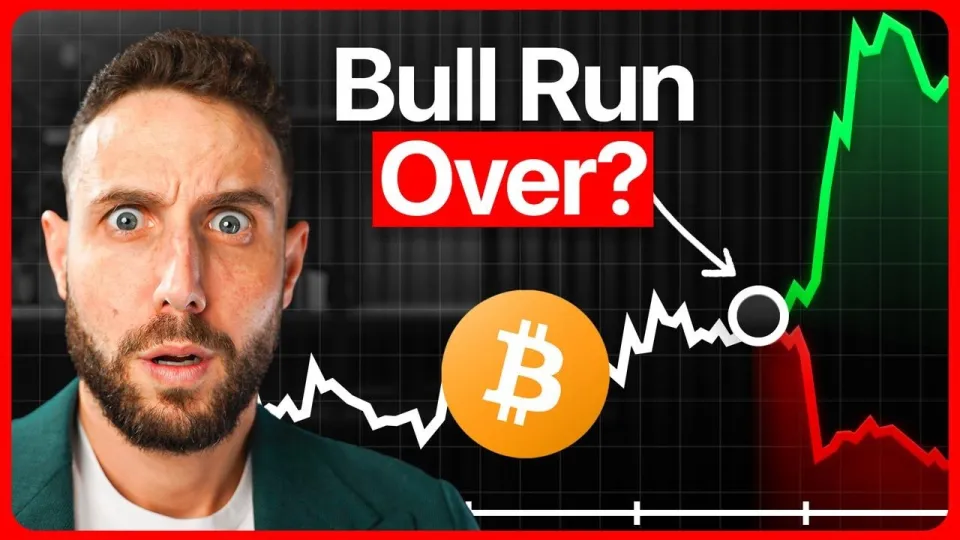
Video: Bitcoin Has 2 DAYS to Save the Crypto Bull Run
Want articles like this for your own video to promote it on YouTube and Google? Order them through the Telegram bot @sat_sit_bot. The bot writes and publishes the articles itself (with your YouTube video embedded) on popular topical websites (no ads). Try it free: 50 articles on us.
· based on the channel EllioTrades
Key takeaways
- The weekly candle close, not an intraday wick, is the deciding signal for whether the crypto bull run survives.
- A close below the multi-week support zone invalidates the bullish structure and shifts the plan to capital preservation.
- EllioTrades frames the setup as a buy-the-dip plan for BTC and select altcoins only if support holds.
- A short, shallow correction historically produces a weaker follow-through rally than a deep reset.
- Bitcoin dominance rising while alts make lower lows is the main risk scenario flagged by viewers.
Bitcoin's next directional move is likely to be decided by a single weekly candle close, not by intraday noise. If BTC holds its multi-week support zone into the weekly close, the bull run stays intact and dips remain buyable; a decisive close below that zone flips the structure bearish and turns the plan into capital preservation. EllioTrades lays out exactly that conditional framework in the breakdown, and traders who want to position around the outcome can use the Kalshi registration bonus to trade the scenario directly.
Why the weekly close matters more than any single day
A weekly close is the price that the largest group of swing and institutional traders use to judge whether a trend is still valid. Wicks get bought and sold by market makers; closes get recorded on charts, in fund reports and in risk models. That is why a market that looks broken on a Tuesday can look perfectly healthy by Sunday night, and vice versa.
The practical rules that follow from this:
- Mark the support zone on the weekly chart, not the 4-hour chart. Use the body of prior weekly candles, not the extremes of the wicks.
- Treat a close inside the zone as neutral. No new leverage, no panic selling.
- Treat a close below the zone as invalidation. Cut risk on high-beta altcoins first, because they fall hardest when BTC dominance rises.
- Treat a strong close back above the zone as confirmation, and only then add exposure.
This is the difference between reacting to a headline and reacting to a completed signal. The two-day window in the title is simply the distance between the current price action and the moment the weekly candle is finalized.
The two scenarios and what each one means for your portfolio
Scenario one is a hold. Bitcoin closes the week above support, the market breathes, and the correction is reclassified as a normal retracement inside an uptrend. In that case the playbook is to scale into quality names on the next higher low, keep position sizes moderate, and let the market prove itself before adding leverage.
Scenario two is a break. A weekly close below the zone invalidates the bullish structure, and the correct response is not to average down blindly but to reduce exposure, raise stablecoin weight and wait for a new base to form. The mistake most traders make in this scenario is treating a broken level as a discount.
The important nuance is that neither scenario requires you to be all-in or all-out. Position sizing is the tool that lets you survive being wrong on direction while still participating if the level holds.
Bitcoin levels and the altcoin rotation
The focus is on BTC first, because altcoins do not rally sustainably while Bitcoin is losing structure. The levels that matter are the weekly support zone, the prior swing high that would confirm a continuation, and the range low that would signal a deeper reset. Everything else is noise.
On the altcoin side, the plan is conditional: coins are on the shopping list only if Bitcoin support holds. That usually means large-cap names with deep liquidity and clear higher-timeframe levels, not low-cap lottery tickets. Two specific ideas come up in the discussion: a short position in Near Protocol, which viewers push back on, and smaller-cap names such as Midnight and Zcash that viewers ask about as potential upside bets. Those are viewer interests, not confirmed positions, and should be treated as watchlist candidates rather than signals.
A simple filter for altcoin selection while BTC is undecided:
- Does the coin hold its own weekly support, independent of BTC?
- Is there enough liquidity to exit a position without moving the price?
- Has the token already made a lower low while BTC has not?
A "no" on the first two questions is usually enough to skip the trade.
The bear-market-length debate and why it changes the next rally
One of the sharpest points raised around this setup is that a very short bear market tends to produce a weaker next bull market. The logic is straightforward: deep, long corrections wash out leverage and hand coins to stronger holders, which builds the base for a violent recovery. Shallow corrections leave excess leverage in the system and cap how far the next leg can run.
That does not mean a shallow dip is bearish in the short term. It means the upside target should be more modest, and risk should be managed more tightly, than in a cycle that followed a brutal drawdown. Traders who expect a repeat of a previous parabolic run after a two-week pullback are implicitly assuming a reset that has not happened.
Questions and doubts traders are raising right now
Sentiment flips fast. A single retracement has moved a large part of the audience from euphoric to convinced the cycle is over, and that swing in mood is itself information about positioning. Crowded bullishness unwinds quickly; crowded bearishness creates the fuel for a squeeze.
Several recurring doubts are worth addressing directly:
- "Weekend liquidity means retail can't save the price." Weekend moves are thin, which is exactly why the weekly close, not the weekend wick, is the signal.
- "Bitcoin dominance is about to spike and alts will make lower lows." That is the main bear case, and it is the reason altcoin entries are conditional on BTC holding support.
- "Is this a buying opportunity, and at what price?" A buying opportunity is defined by the level holding and a confirmed higher low, not by a round number. Without confirmation, a lower price is not a discount, it is a warning.
- "Why wish for a cheaper entry instead of paying up?" Paying higher prices for a confirmed trend raises the probability of gains; buying a broken trend lowers it. Cheaper is only better when the structure is intact.
- "What about index decisions affecting crypto treasury companies?" A decision on whether digital-asset treasury companies stay in global indexes is a genuine catalyst, because passive funds would be forced to sell if they are removed.
Tools and links mentioned in the breakdown
- Trade $50 and get $50 on Kalshi
- Liquid trading with 10% off fees
- WEEX deposit bonus up to $4,000
- Follow the public trading journey on fomo
- EllioTrades on X
Conclusion
Bitcoin is at a decision point where one weekly close separates a buyable dip from a broken trend, and the correct response is a pre-written plan for both outcomes rather than a prediction. Hold support and the bull run continues with altcoins back in play; lose it and the priority shifts to protecting capital and waiting for a new base. Position size so that being wrong is survivable, and let the candle, not the commentary, trigger the trade. This framework comes from the EllioTrades video breakdown, and if you want to trade the outcome directly, you can claim the Kalshi bonus and register here.
Source: Bitcoin Has 2 DAYS to Save the Crypto Bull Run · Markdown version
Questions & answers
What exactly counts as a weekly close for Bitcoin?
It is the price at the moment the weekly candle finishes, typically Sunday midnight UTC on most charting platforms. A wick below support that recovers before the close does not invalidate the structure, while a candle body closing below the zone does. Use the same exchange and timezone consistently so your levels do not shift.
Should I buy altcoins before Bitcoin confirms support?
No. Altcoins are high-beta bets on Bitcoin's trend, and they fall hardest when BTC dominance rises during a breakdown. The conditional plan is to keep a watchlist ready and only scale in after BTC prints a confirmed higher low above support. Waiting costs some upside but avoids the worst drawdowns.
Is a short bear market actually bad for the next bull run?
A shallow, brief correction leaves more leverage and weaker hands in the market, which tends to cap the size of the following rally. Deep drawdowns reset positioning and historically precede stronger recoveries. Treat this as a reason to keep upside targets realistic rather than as a reason to sell everything.
What non-price catalyst could break the setup?
Index-provider decisions on whether digital-asset treasury companies remain eligible for global benchmarks are a real risk, because passive funds tracking those indexes would be forced to sell if the companies are removed. Regulatory headlines and macro data can also override technical levels. Price structure is the primary signal, but catalysts can gap the market through it.